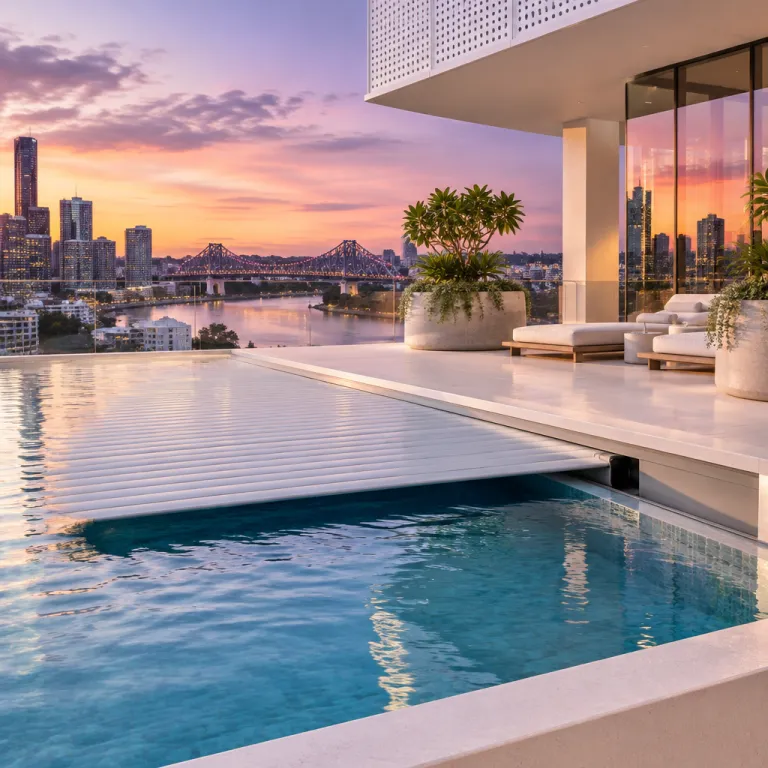
How design hotels in Brisbane turn architecture into an amenity
In Brisbane, Australia, a new generation of design hotels treats the building itself as the primary amenity. These properties go beyond the traditional luxury hotel model, where a high star rating, large rooms and polished service define value, and instead place architecture, materiality and context at the centre of the stay. For travellers who book with an eye for form and proportion, the difference between a standard Brisbane hotel and a true design-led property lies in the intent behind every line, junction and view.
Across Brisbane City, architects and interior designers are working together from the earliest sketches, rather than decorating a finished shell. That collaboration means the hotel features you notice first — the way the lobby opens to the street, how the swimming pool frames the skyline, where the cocktail bars sit in relation to the Brisbane River — are baked into the structure, not added as afterthoughts. In this context, the phrase “design hotels Brisbane architecture” becomes shorthand for a philosophy that treats light, air and urban life as core components of hospitality rather than a marketing slogan.
Consider how a conventional hotel Brisbane property might prioritise maximum room count over spatial drama. A design-focused hotel often sits at the opposite end of that spectrum, sometimes accepting fewer rooms to preserve double-height volumes, generous corridors and layered public spaces that invite lingering. When you compare hotels in Brisbane, Australia through this lens, you start to see which building offers a genuine sense of place and which one simply occupies a convenient street address near the river or the central business district.
James Street, The Calile and the subtropical design language
Nowhere captures Brisbane’s design-led hotel architecture quite as clearly as James Street in Fortitude Valley. Here, The Calile Hotel — opened in 2018 with 175 rooms and suites — has become a shorthand for Brisbane fortitude in design terms, anchoring a precinct where concrete, breeze blocks and lush planting reinterpret the classic Queenslander language for a vertical, urban lifestyle. The Calile is not just a hotel Brisbane travellers book for its location on James Street, but a case study in how a building can choreograph shade, airflow and social life.
The Calile Hotel lies on a gently sloping street, its pale masonry and deep loggias stepping back to create a series of high–low terraces. These terraces host cocktail bars, restaurants and retail, while the central swimming pool courtyard offers a resort-like heart that still feels connected to Brisbane city life. Photographs by Melbourne-based photographer Sean Fennessy, widely published in Australian design media, have become almost as famous as the property itself, capturing how the hotel features curved balconies, arched colonnades and planted edges that soften the strong geometry and frame glimpses of the Brisbane River and the skyline beyond.
Behind the scenes, the architecture and interiors were led by the Brisbane practice Richards & Spence, whose work across multiple hotels in Brisbane, Australia has helped define a new subtropical modernism. The partnership between Ingrid Richards and Adrian Spence is central to the way design hotels in Brisbane now think about climate, material and urban context. In interviews, the architects have described their approach as “making shade and making places”, and when you book a stay here you are effectively booking into their vision of how a star hotel in a warm river city should feel, from the cool concrete underfoot to the filtered daylight in the rooms and the way each building offers both retreat and engagement with the street.
For readers wanting a broader view of iconic properties beyond James Street, an excellent starting point is this guide to elegant city stays and other iconic Brisbane hotels. It sets The Calile alongside heritage-listed addresses and newer design hotels, helping you understand how different hotel features align with your own priorities. In that mix, you will see how some hotels lean into river views, while others use their building envelope and interior planning to create an inward-looking sanctuary that still lies only minutes from major cultural and dining precincts.
From Queen's Wharf to heritage listed icons: reading the skyline
As Brisbane City grows, the Queen's Wharf precinct is reshaping the riverfront and forcing travellers to think more critically about design hotels and architecture. This large-scale development, led by the Destination Brisbane Consortium, includes an integrated resort, multiple hotels and sculptural buildings that are redefining how the skyline meets the Brisbane River and how public space threads between towers. Publicly available project summaries indicate that the precinct will deliver more than 1,000 new hotel rooms across several brands, reshaping the balance between casino-style resorts and independent design-led accommodation.
Some of Brisbane's most characterful hotels occupy heritage-listed buildings that predate the current wave of glass and steel. These properties often lie on prominent street corners or riverfront sites, where thick masonry walls, high ceilings and original details create a very different atmosphere from new-build design hotels. When you compare a heritage-listed hotel Brisbane address with a contemporary tower in Brisbane, Australia, you are really choosing between patina and precision, between the romance of history and the clarity of a purpose-designed envelope where every junction has been reconsidered.
Neighbourhood context matters as much as the building itself, especially for solo travellers who want to walk rather than rely on courtesy vehicles. A design-forward hotel tends to sit within a living precinct, not an isolated block, which is why areas like Fortitude Valley, South Bank and the CBD riverfront continue to attract new hotels. To understand how each place feels on the ground, and how long it takes in minutes to move between river paths, cultural institutions and cocktail bars, use this detailed neighbourhood decoder for the luxury traveller as a companion to your hotel search.
Small scale, big intent: compact design hotels and Sixty-Five Hotel Brisbane
While large riverfront towers dominate the skyline, some of the most interesting examples of design-conscious accommodation in Brisbane are compact properties under 100 rooms. These smaller hotels often sit on tight street sites, where every square metre must work hard and every corridor, stair and lobby becomes part of the guest experience. The Radisson Individuals Sixty-Five Hotel Brisbane on Turbot Street is a clear example of how a 59-room star hotel can feel both intimate and architecturally confident.
This hotel lies only minutes from the Brisbane River and the central business district, yet its building offering is more about interior spatial quality than grand external gestures. Rooms are planned with a high–low approach to material and colour, pairing calm, neutral bases with stronger accents in joinery, textiles and lighting. In a compact hotel Brisbane property like this, hotel features such as window placement, acoustic separation and circulation routes matter as much as a rooftop swimming pool or large-scale artwork, because they shape how comfortably you move through the building each day.
For solo travellers, the appeal of these smaller hotels in Brisbane, Australia is the balance between privacy and connection. Public spaces are scaled so that you can sit with a laptop or a drink without feeling lost, while still having enough buzz from nearby cocktail bars and restaurants to feel plugged into Brisbane city life. When you book a room in a compact design hotel, pay attention to how the hotel lies within the street grid, what it offers in terms of natural light and outlook, and whether the architecture supports the way you actually travel rather than just looking good in photographs.
Art, comfort and the line between design and marketing
One of the clearest shifts in Brisbane’s design hotel scene is the rise of the art hotel, where lobbies double as galleries and guest rooms host curated works rather than generic prints. Properties such as W Brisbane, which opened in 2018 with more than 300 rooms and has collaborated with Queensland Ballet on cultural programming, show how a hotel can become a platform for local creativity rather than a neutral backdrop. In these hotels, the building offering is not only about form and material, but about how art, performance and hospitality intersect along the Brisbane River.
That said, not every Brisbane hotel that talks about design delivers it in a meaningful way. Some hotels in Brisbane, Australia use the language of architecture and art in their marketing, yet their hotel features amount to a few statement chairs in the lobby and a mural near the lifts. A genuine design hotel lies in the alignment between concept and execution, where the way you move from street to reception, from rooms to swimming pool, and from restaurant to cocktail bars feels coherent and intentional rather than patched together.
Comfort is the other side of this equation, and it is where some highly photogenic hotels fall short. When you book a stay, look beyond the images and ask how the building handles acoustics, privacy, climate control and wayfinding, because these are the quiet aspects of design that determine whether you sleep well and feel at ease. In Brisbane City, the best design hotels manage to be both visually striking and deeply comfortable, proving that architecture can be an amenity without becoming a distraction from the simple pleasure of a well-considered room.
How to choose a genuine design hotel in Brisbane
For travellers searching specifically for design hotels and architecture in Brisbane, the challenge is separating genuine design intent from surface-level styling. Start by looking at who designed the building and interiors, because names like Richards & Spence signal a track record of thoughtful, climate-responsive work across multiple hotels and public projects in Brisbane, Australia. When you see the partnership of Ingrid Richards and Adrian Spence attached to a hotel, you can expect a clear architectural narrative, from the way the building meets the street to how the rooms frame views of the Brisbane River or the city skyline.
Next, examine how the hotel lies within its neighbourhood and what it offers beyond the guest rooms. A true design-forward hotel Brisbane property will integrate with its street, often opening ground floor spaces to passers-by and blurring the line between lobby, café and public realm. Pay attention to whether the hotel features meaningful outdoor spaces, such as a swimming pool terrace, planted balconies or rooftop cocktail bars, because these elements show how the architecture responds to Brisbane's subtropical climate rather than fighting it with sealed glass boxes.
Finally, consider how the property fits into your wider itinerary across Brisbane City and the surrounding region. Many travellers pair an urban stay with a hinterland retreat, using guides such as this review of an elevated escape at Spicers Peak Lodge to balance riverfront energy with rural calm. When you book both city and countryside hotels in Brisbane, Australia and beyond, you start to appreciate how different building types, scales and settings can all express a coherent design philosophy that values place, climate and human experience in equal measure.
Key figures on Brisbane's design hotel and architecture scene
- Tourism and Events Queensland has reported that Brisbane City welcomes several million domestic and international visitors each year; its 2022–23 reporting notes strong recovery in overnight visitor expenditure, a scale of demand that has encouraged multiple new design-led hotels to open across the riverfront and inner suburbs.
- Data from the Australian Bureau of Statistics shows that Queensland has recorded consistent growth in short-term accommodation nights over recent reporting periods, with Brisbane, Australia capturing a significant share thanks to its expanding cultural, sporting and business events calendar.
- Industry analyses of the Brisbane hotel pipeline, including summaries published by major commercial real estate agencies, indicate that hundreds of new rooms have been added in recent development cycles, many within mixed-use buildings that integrate hotels, residential apartments and retail, reflecting a broader shift towards design-conscious urban precincts.
- Reports on the Queen's Wharf development highlight that the integrated resort will include multiple star hotel brands and thousands of square metres of public realm, reshaping how visitors experience the Brisbane River edge and reinforcing architecture as a central tourism asset.
FAQ: design hotels and architecture in Brisbane
What makes a Brisbane hotel a genuine design hotel rather than just stylish?
A genuine design hotel in Brisbane is defined by architecture and planning decisions made from the outset, not by decorative choices layered on later. Look for a clear design narrative, strong integration with the street and climate-responsive features such as shaded outdoor spaces and natural ventilation strategies. When these elements align with comfortable rooms and coherent circulation, you are likely looking at a true design-led property.
Which Brisbane neighbourhoods are best for architecture focused hotel stays?
Fortitude Valley, particularly around James Street, is a key area for design hotels and contemporary architecture, with properties like The Calile Hotel setting the tone. The CBD riverfront and South Bank also offer architecturally interesting hotels that engage with the Brisbane River and cultural institutions. For travellers who value walkability and urban texture, these neighbourhoods provide the richest mix of design, dining and nightlife.
How important is proximity to the Brisbane River when choosing a design hotel?
Staying near the Brisbane River gives you immediate access to walking paths, ferries and some of the city's most dramatic views, which many design hotels use as a core part of their appeal. However, properties slightly back from the river, especially in Fortitude Valley and New Farm, often offer more intimate, neighbourhood-focused experiences. The best choice depends on whether you prioritise skyline vistas or a more local, street-level atmosphere.
Are smaller design hotels in Brisbane suitable for solo travellers?
Compact design hotels with fewer than 100 rooms can be ideal for solo travellers, because their scale often creates a more personal atmosphere and easier navigation. These properties typically offer well-considered public spaces where you can work or relax without feeling anonymous, while still being close to restaurants, bars and cultural venues. When booking, check how the hotel lies within its precinct and whether it offers good lighting, clear wayfinding and active street frontages.
How can I balance design and comfort when booking a Brisbane hotel?
To balance design and comfort, look beyond photographs and focus on practical details such as room size, acoustic performance, climate control and storage. Reviews that mention good sleep quality, intuitive layouts and responsive service are strong indicators that the architecture supports everyday comfort. In Brisbane, the most successful design hotels combine strong visual identity with these quieter qualities, turning architecture into an amenity you feel as much as you see.
References
- Tourism and Events Queensland – visitor statistics and industry reports
- Australian Bureau of Statistics – short-term accommodation and tourism data
- Brisbane City Council planning and development reports
- Destination Brisbane Consortium – Queen’s Wharf Brisbane project information